千山暮雪
消息称 Bose QuietComfort 第二代头戴式降噪耳机 8 月发布_我的网站

A |
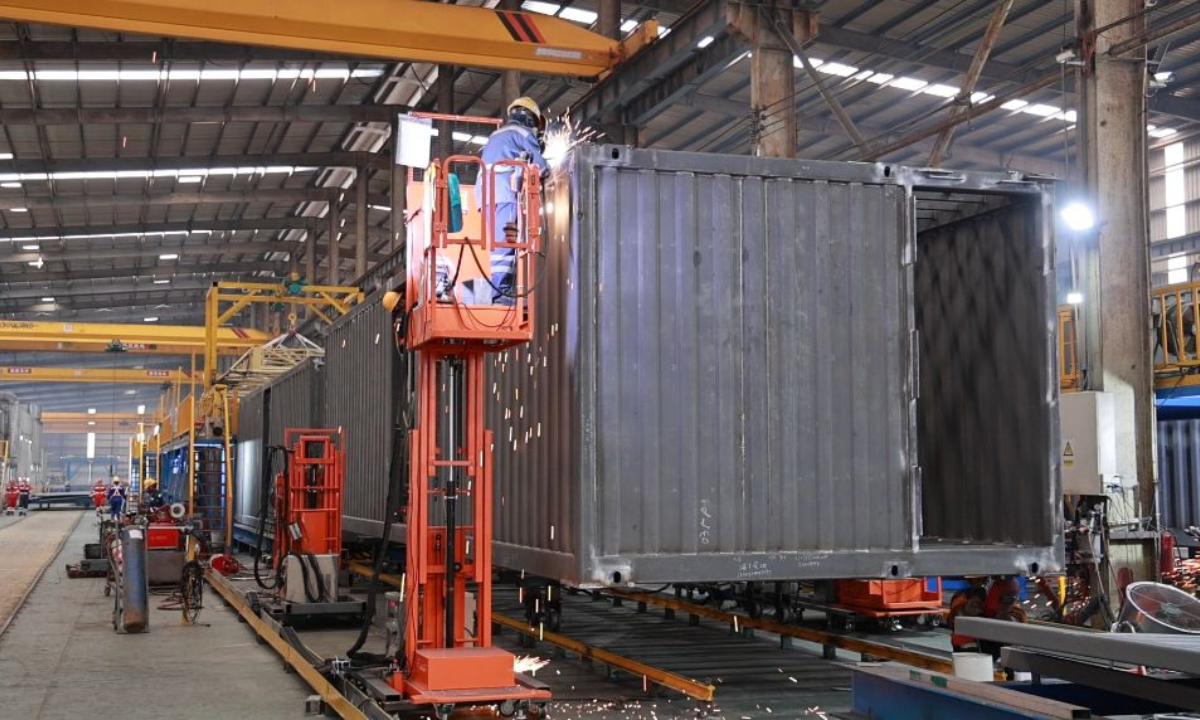
This photo taken on June 9, 2026 shows a workshop of Foshan Meizong Buildings Technology Co., Ltd. in Foshan, south China's Guangdong Province. (Xinhua/Huang Guobao)
A 19-story hotel in Brisbane was not a conventional construction project in Australia, much of it having already been built thousands of kilometers away, inside a factory in south China.
Its room modules arrived with walls, pipes, wiring and interior fittings largely completed, allowing the building to be assembled at a pace of roughly one floor every four to five days.
The project was delivered by Foshan Meizong Buildings Technology Co., Ltd., a firm based in the city of Foshan in Guangdong Province. It reflects a broader shift in the industry, with more work that once had to be done at a construction site now being completed on a factory floor.
Inside Meizong's workshop, automated cutters slice steel tubes to precise dimensions as workers weld structural joints. Assembly teams install wall panels and lay utility lines. In the finished-goods area, dozens of units stand ready for shipment, with kitchens, bathrooms, lighting and sockets already fitted.
More than 90 percent of the work can be completed in the factory, while delivery takes only about one-third of time needed for conventional construction, according to Pang Mingyuan, the company's general manager.
"Building a new home is like building with blocks," Pang said.
Modular housing is gaining acceptance in markets such as Australia and New Zealand, where conventional construction faces high labor costs, lengthy building cycles and weather-related disruptions, while housing remains scarce in some remote areas, Pang adds.
Foshan alone is home to more than 300 exporters of prefabricated buildings. Across the industry, modular structures are being used for hotels, dormitories and offices, while some manufacturers are branching into customized outdoor spaces.
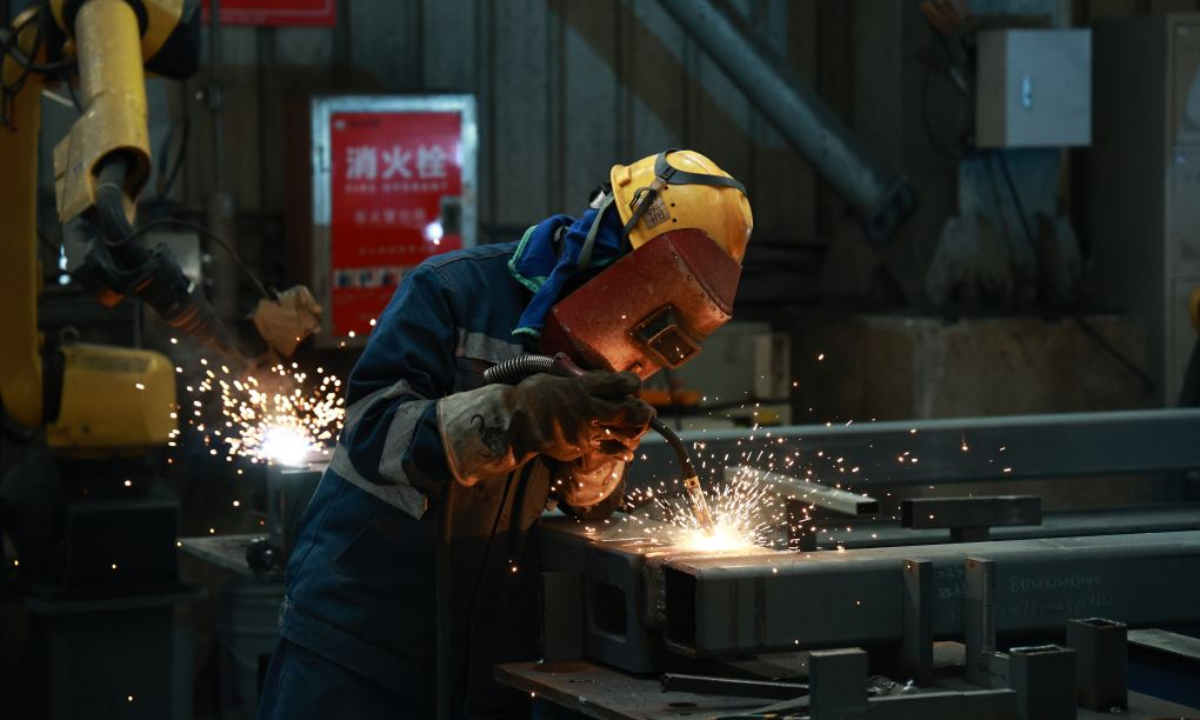
A worker welds structural joints at a workshop of Foshan Meizong Buildings Technology Co., Ltd. in Foshan, south China's Guangdong Province, June 9, 2026. (Xinhua/Huang Guobao)
At SunnyJoy Intelligent Technology Co., Ltd., the glass roof of a modular outdoor room slides open under electric power. Made up of 13 modules, the structure attracted attention at this year's 139th Canton Fair.
"Three adults can assemble it in two and a half hours by following an installation video," said Zhang Yong, the company's general manager.
The company's products sell well in North America and Oceania, while emerging markets in Africa and Southeast Asia are also growing rapidly. Social media has become an important source of overseas customers: SunnyJoy has built a following of around 10 million across domestic and overseas platforms, with online channels generating more than half of its customer inquiries.
Behind such products is the Pearl River Delta's manufacturing network. Zhang said a single outdoor structure can involve dozens of suppliers, with everything from frames and worktops to drive systems and lighting sourced within the region.
That proximity allows manufacturers to adjust designs, upgrade components and respond quickly to changing customer requests. As products become more integrated, companies are also expanding into higher-value offerings that incorporate solar glass, energy storage and intelligent control systems.
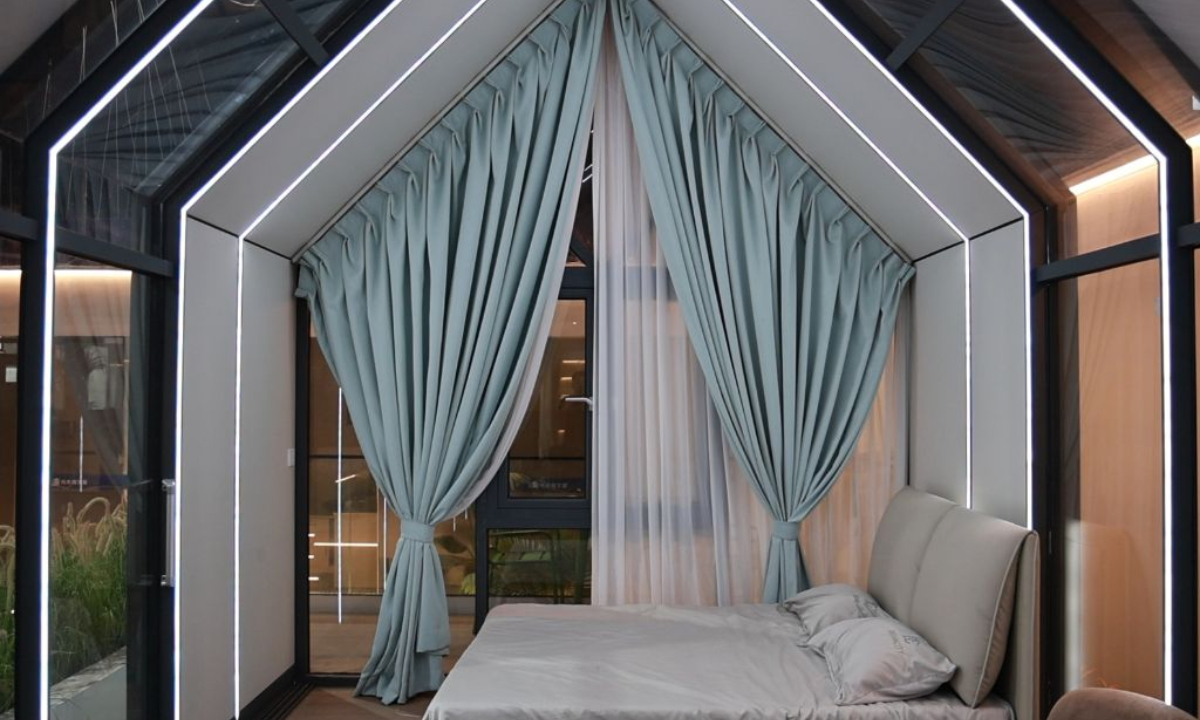
This photo taken on June 9, 2026 shows a modular room displayed at SunnyJoy Intelligent Technology Co., Ltd. in Foshan, south China's Guangdong Province. (Xinhua/Huang Guobao)
At a modular factory of China Construction Science & Technology Group Co., Ltd. in the Shenshan Special Cooperation Zone, laser cutting, automated welding and intelligent assembly work in coordination. A digital management system links design, procurement and production, generating material lists and processing drawings from design plans.
Its standardized production system can turn out a wall in 12 minutes and a room module in two hours. The facility has an annual capacity of up to 30,000 units and can produce different types of building modules in parallel according to project needs.
The expansion taking place on factory floors is also showing up in export figures. In the first half of this year, exports of prefabricated structures from seven cities under Guangzhou Customs reached 1.94 billion yuan (285.7 million U.S. dollars), up 21.2 percent year on year, with products reaching more than 190 countries and regions.
One modular-building producer said its export orders have risen nearly 60 percent year on year so far this year, with production scheduled several months ahead.
Manufacturers are also expanding their localized services overseas. SunnyJoy said it is working with third-party warehouses in markets including the United States and Australia to speed up deliveries.
For Chinese producers, the opportunity goes beyond shortening construction time. Their expansion overseas points to a broader shift: buildings are increasingly being designed, produced and exported more like manufactured goods.
。 IT之家 7 月 20 日消息,据法国媒体 Dealabs Magazine 爆料,全新 Bose QuietComfort(第二代)头戴式耳机即将发布。这款新品此前没有任何相关的爆料或传闻泄露,消息称这款耳机将于 8 月 13 日开售,预计官方将于 8 月 7 日正式官宣并开启预购。
据IT之家此前报道,Bose 在 2023 年发布了 QuietComfort 耳机和 QuietComfort Ultra 耳机,国行售价分别为 2499 元和 3599 元;2025 年,Bose 仅推出了 QuietComfort Ultra II 耳机,国行售价 3599 元。
▲ QuietComfort Ultra II 耳机
据悉,Bose QuietComfort 第二代头戴式耳机在首发时将提供至少六种配色。根据该媒体获得的官方介绍,新款耳机的主要改进与新特性如下:
全新设计:采用药丸状耳罩与更宽的可调节头梁,并增加了合成皮革材质的用量,以提升日常佩戴舒适度;
Bose TrueSpatial:该空间音频技术能够提供更具沉浸感且更自然的聆听体验;
无损音频:新款耳机支持通过 USB-C 接口传输高保真音频,在第一代产品上该接口仅能用于充电;
降噪优化:ActiveSense 技术现在能够在通透模式下,自动削弱刺耳的突发环境噪音;
全新聆听模式:新增沉浸模式、专为视频内容设计的影院模式以及“降噪关闭”选项。这些新功能取代了第一代的个性化模式系统(此前该系统仅提供一项防风噪选项);
通话质量提升:更有效地抑制环境背景噪音,确保语音通话更加清晰;
按键控制重构:按键布局更加直观,直接集成于耳罩之上。
新款耳机的电池续航表现与现款型号保持一致:在开启主动降噪的情况下,最长可提供 24 小时的续航时间;若同时开启 TrueSpatial 沉浸式音频,续航时间缩短为 18 小时。
价格方面,这款耳机在海外的售价为 349.95 欧元(现汇率约合 2711 元人民币)或 359 美元(现汇率约合 2434 元人民币)。
Current article:http://hrdgphx.shouyouxumianpouluanteng.shop/d70iwm/1lc.html
Published on:00:00:00
